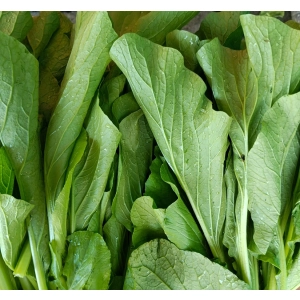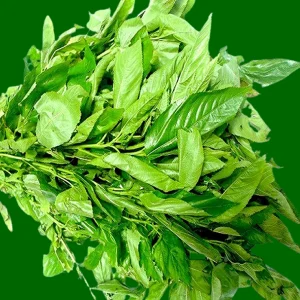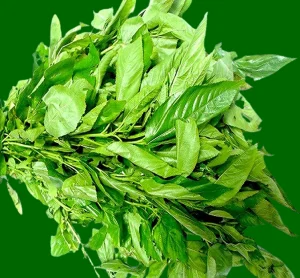
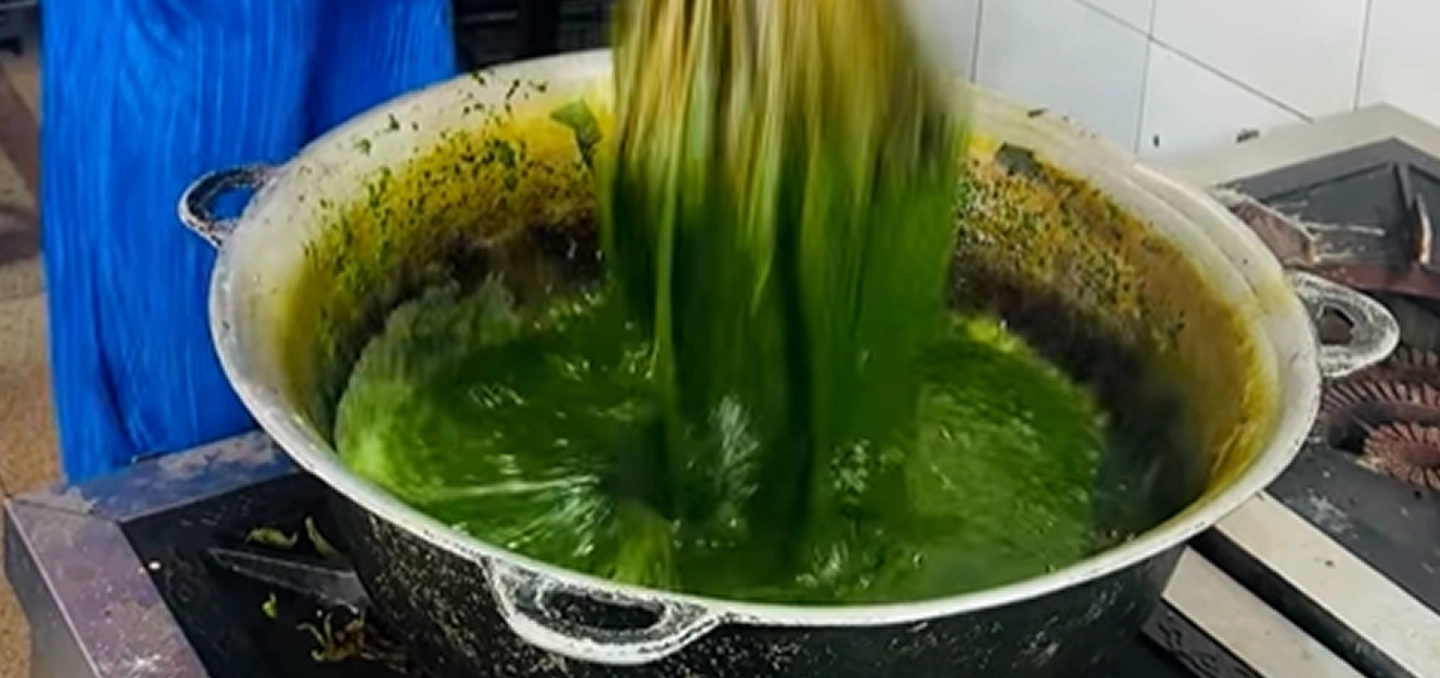
Ewedu, or jute leaves, is a popular and nutritious dish in Nigerian cuisine, especially among the Yoruba people. It is often served with fufu, pounded yam, or eba and pairs wonderfully with different types of soups and stews. This dish is beloved not only for its health benefits but also for its rich, mucilaginous texture. If you’re new to Nigerian food, don’t worry! This step-by-step guide will help you cook ewedu the traditional way in your own kitchen.
Fresh ewedu (jute leaves) – about 2 cups, washed and chopped
1/4 cup of ground dried crayfish (optional)
2 tablespoons of ground pepper or Scotch bonnet peppers (adjust to taste)
1-2 tablespoons of locust beans (iru) or fermented soybeans (ogiri) (optional for flavor)
1 tablespoon of palm oil (for the rich flavor and color)
Salt to taste
Water (about 2-3 cups depending on desired consistency)
A large pot
A wooden spoon
A mortar and pestle (for pounding if using whole locust beans or crayfish)
Begin by thoroughly washing the ewedu leaves in clean water to remove any dirt and pesticides.
Once clean, chop the leaves into smaller pieces. Traditionally, ewedu leaves are not finely chopped, as this preserves the texture. However, you can adjust the size based on your preference.
In a large pot, add about 1 tablespoon of palm oil and heat it over medium heat. Allow it to melt and release its rich aroma. Palm oil is a key ingredient in Nigerian cooking, giving the dish its characteristic flavor and color.
Once the palm oil is heated, add the locust beans (iru) or ogiri if you’re using them. This step is optional, but locust beans add a pungent, savory flavor that is distinct in Nigerian cuisine.
Stir the locust beans into the oil, allowing them to fry for about 1-2 minutes. This will release their full flavor.
Next, add the ground pepper (Scotch bonnet or any pepper of your choice) to the pot. This will provide the necessary heat for the dish.
Stir well to combine the oil, locust beans, and pepper. Let it fry for about 2 minutes to infuse the flavors together.
Now, it’s time to add the chopped ewedu leaves into the pot. Carefully stir the leaves into the pot, ensuring that they are coated with the palm oil and pepper mixture.
The leaves will begin to release their natural mucilaginous texture, creating a slimy consistency as they cook.
Pour in about 2-3 cups of water, depending on the consistency you prefer for your soup. The amount of water will affect how thick or watery the ewedu becomes.
Stir the mixture gently and let it simmer on low heat for about 5-10 minutes. As the ewedu cooks, it will continue to thicken and become more slimy in texture.
If you’re using ground dried crayfish, this is the time to add it. Crayfish adds a delicious depth of flavor to the dish.
Stir the crayfish into the soup and let it cook for an additional 2-3 minutes. This step is optional, but it really enhances the flavor.
Season with salt to taste. Keep in mind that the locust beans or crayfish might already add some saltiness, so be sure to taste before adding more salt.
Stir well and allow everything to cook together for another 2 minutes.
Your traditional Nigerian ewedu soup is now ready! Serve it hot with your favorite fufu (pounded yam, garri, or eba) or any starch of your choice.
Ewedu can also be paired with rice or served as a side dish.
Texture: Ewedu is known for its slippery texture, so don’t worry if the leaves become slimy as they cook. This is the characteristic feature of the dish.
Vegan Option: To make this dish completely vegan, simply skip the locust beans (iru) and crayfish, and opt for other seasonings like onions and garlic for added flavor.
Spice Level: Adjust the amount of pepper to your preference. Nigerian dishes are known for their spiciness, but you can always reduce the heat by using fewer peppers.
Storage: Ewedu can be stored in the fridge for a few days, but it’s always best to enjoy it fresh.
Conclusion:
Ewedu is a staple in Nigerian households, and now that you’ve learned how to cook it the traditional way, you’re ready to experience the flavors of Nigeria in your own kitchen! Whether you’re preparing it for a special occasion or as a weeknight meal, ewedu is sure to be a hit with your family and friends. Enjoy the journey of discovering this delicious dish and share it with others to experience the rich cultural heritage of Nigeria.
All rights reserved. This material, and other digital content on this website, may not be reproduced, published, broadcast, rewritten or redistributed in whole or in part without prior express written permission from EL-ROI SOLUTIONS INC.
Contact: theeditor@elroisolutionsinc.ca

El-Roi Solutions Inc
We firmly believe that the internet should be available and accessible to anyone, and are committed to providing a website that is accessible to the widest possible audience, regardless of circumstance and ability.
To fulfill this, we aim to adhere as strictly as possible to the World Wide Web Consortium’s (W3C) Web Content Accessibility Guidelines 2.1 (WCAG 2.1) at the AA level. These guidelines explain how to make web content accessible to people with a wide array of disabilities. Complying with those guidelines helps us ensure that the website is accessible to all people: blind people, people with motor impairments, visual impairment, cognitive disabilities, and more.
This website utilizes various technologies that are meant to make it as accessible as possible at all times. We utilize an accessibility interface that allows persons with specific disabilities to adjust the website’s UI (user interface) and design it to their personal needs.
Additionally, the website utilizes an AI-based application that runs in the background and optimizes its accessibility level constantly. This application remediates the website’s HTML, adapts Its functionality and behavior for screen-readers used by the blind users, and for keyboard functions used by individuals with motor impairments.
If you’ve found a malfunction or have ideas for improvement, we’ll be happy to hear from you. You can reach out to the website’s operators by using the following email info@elroisolutionsinc.ca
Our website implements the ARIA attributes (Accessible Rich Internet Applications) technique, alongside various different behavioral changes, to ensure blind users visiting with screen-readers are able to read, comprehend, and enjoy the website’s functions. As soon as a user with a screen-reader enters your site, they immediately receive a prompt to enter the Screen-Reader Profile so they can browse and operate your site effectively. Here’s how our website covers some of the most important screen-reader requirements, alongside console screenshots of code examples:
Screen-reader optimization: we run a background process that learns the website’s components from top to bottom, to ensure ongoing compliance even when updating the website. In this process, we provide screen-readers with meaningful data using the ARIA set of attributes. For example, we provide accurate form labels; descriptions for actionable icons (social media icons, search icons, cart icons, etc.); validation guidance for form inputs; element roles such as buttons, menus, modal dialogues (popups), and others. Additionally, the background process scans all the website’s images and provides an accurate and meaningful image-object-recognition-based description as an ALT (alternate text) tag for images that are not described. It will also extract texts that are embedded within the image, using an OCR (optical character recognition) technology. To turn on screen-reader adjustments at any time, users need only to press the Alt+1 keyboard combination. Screen-reader users also get automatic announcements to turn the Screen-reader mode on as soon as they enter the website.
These adjustments are compatible with all popular screen readers, including JAWS and NVDA.
Keyboard navigation optimization: The background process also adjusts the website’s HTML, and adds various behaviors using JavaScript code to make the website operable by the keyboard. This includes the ability to navigate the website using the Tab and Shift+Tab keys, operate dropdowns with the arrow keys, close them with Esc, trigger buttons and links using the Enter key, navigate between radio and checkbox elements using the arrow keys, and fill them in with the Spacebar or Enter key.Additionally, keyboard users will find quick-navigation and content-skip menus, available at any time by clicking Alt+1, or as the first elements of the site while navigating with the keyboard. The background process also handles triggered popups by moving the keyboard focus towards them as soon as they appear, and not allow the focus drift outside it.
Users can also use shortcuts such as “M” (menus), “H” (headings), “F” (forms), “B” (buttons), and “G” (graphics) to jump to specific elements.
We aim to support the widest array of browsers and assistive technologies as possible, so our users can choose the best fitting tools for them, with as few limitations as possible. Therefore, we have worked very hard to be able to support all major systems that comprise over 95% of the user market share including Google Chrome, Mozilla Firefox, Apple Safari, Opera and Microsoft Edge, JAWS and NVDA (screen readers).
Despite our very best efforts to allow anybody to adjust the website to their needs. There may still be pages or sections that are not fully accessible, are in the process of becoming accessible, or are lacking an adequate technological solution to make them accessible. Still, we are continually improving our accessibility, adding, updating and improving its options and features, and developing and adopting new technologies. All this is meant to reach the optimal level of accessibility, following technological advancements. For any assistance, please reach out to info@elroisolutionsinc.ca